
Tips for driving in wet weather
We are seeing increasingly dramatic weather systems around the globe and heavy rain and flooding are now simply part of everyday life, all year round. Wet weather - even just light drizzle - can pose additional risks. So what should you look out for and how should you adjust your driving?
Grip
Reduced grip is one of the main hazards in the wet. Due to to the lower levels of friction between the tyres and the road, it is easier for a car to skid when trying to slow down or go round bends when the road is wet. Rain in the summer can be particularly dangerous. Dry roads tend to form a slightly oily surface in heat and as soon as there is any water added, they become extremely slippery.
We can’t control the weather but there are two important things you can do: increase your stopping distance and reduce your speed.
Increasing the distance between you an the car in front not only provides the right stopping time, it helps buy useful seconds to anticipate the actions of other road users and changing situations. Your safe distance from the car in front should be at least doubled. Instead of the usual two-second rule of thumb, use the four-second rule when the road is wet. This is where you watch the car in front pass a fixed object such as a lamp post and count a full four seconds before you drive past that same object. Dropping back from the vehicle in front - especially lorries - also helps keep out of their spray and will improve your ability to see.
Reducing your speed will increase car control on wet roads and therefore reduce the risk of skidding or aquaplaning. Remember speed limits are maximums and that you need to reduce your speed considerably when conditions are poor.
Visibility
It is your responsibility as a driver to ensure that windows are de-misted and the windscreen is washed and wiped as needed. Ensure your car’s air conditioning is switched on because it also operates as a dehumidifier.
In poor weather, you should make your vehicle as visible as possible to other road users. This means using dipped headlights in rain. Automatic lights are fitted to many models of car but be aware they don’t always come on early enough in heavy rain so be prepared to switch on manually. Remember day running lights (DRLs) are only on the front of a car; in poor visibility, you need headlights too. If you are driving a dark or grey coloured car, you should consider putting your lights on earlier.

What is aquaplaning?
Aquaplaning happens when a layer of water builds up between a vehicle’s tyres and the road and the car effectively rides on top of this layer. This water sandwiched beneath the tyres means the driver will be unable to control the vehicle properly. Aquaplaning can occur when a road is flooded but may happen after lighter showers too if the conditions are right. Importantly, it is more likely to happen at speed - one of the reasons to slow down in the wet - and cars with wider or worn tyres can be more susceptible because it is harder to disperse the water.
If a car starts to aquaplane, there will be a lightness of steering and any input will have little effect on the car’s direction. The revs may rise too as the wheels spin and the car can start to drift.
If you experience aquaplaning, the important thing is to react gently. Back off the accelerator but don’t press the brake. Switch off cruise control if it is active. And keep the steering in the straight-ahead position so when you regain control the car continues in the correct direction rather than veering off. Once the car feels under control, brake gently to bring down the speed.
To avoid aquaplaning, ensure your tyres have plenty of tread, keep speeds down, follow the tracks in the road where the car in front has pushed some of the water away and aim to drive smoothly.
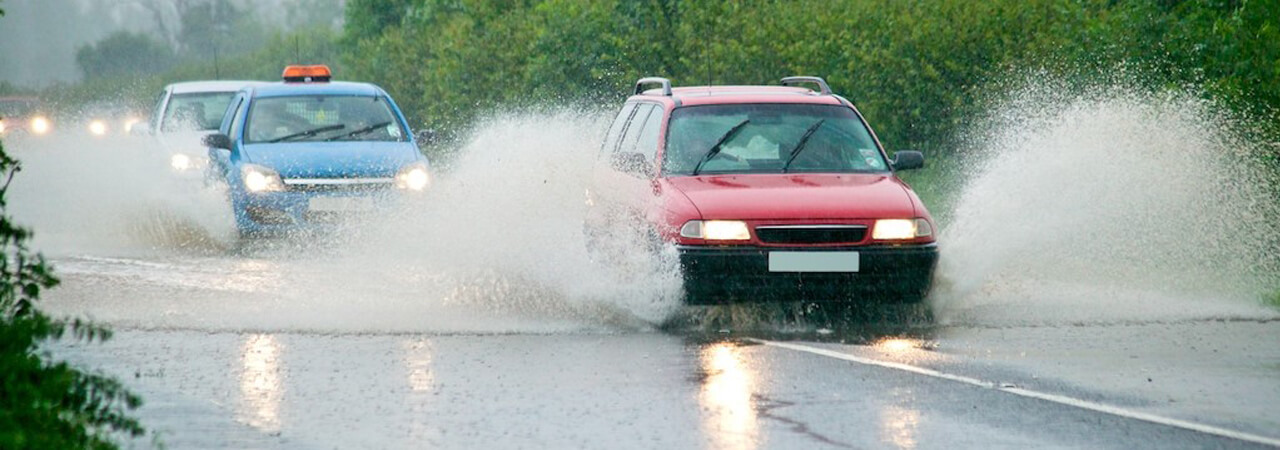
Floods
Floods pose a number of dangers. They can cause aquaplaning or make a car veer sharply to one side when water is hit at speed. Spray can cause temporary loss of visibility for the driver and following vehicles. Deep, moving water can also sweep a car away.
Floods also cause considerable damage to cars. You can’t see what is beneath the water: there could be potholes or debris which can wreck suspension and tyres. Driving through standing water can also cause an engine to fail either by shorting electrics or by water being sucked right into the engine via the air intake. And if your car interior is flooded, it is extremely hard to dry out without causing mould and corrosion.
If you come across a flooded road:
Avoid driving through if at all possible.
Don’t drive in deeper than 10cm of water (4 inches).
Let vehicles in front (or coming the other way) go through flooded area completely before you attempt it. This is so you can see how deep it is, check there is a safe route through and so you can drive through without stopping.
Drive slowly but steadily, creating a small bow wave which moves on ahead of your car.
Test your brakes as soon as convenient and safe afterwards.
General wet weather tips
Prepare! Check the www.metoffice.gov.uk for warnings before you set off.
Ensure your tyres are in good condition (replacing them well before they reach the legal minimum tread depth of 1.6mm).
Reduce your speed.
Double the distance between you and the car in front.
Use your wipers at the correct speed to clear your screen.
Use the car’s ventilation system to keep windows de-misted inside.
Look carefully ahead at the road for flooded sections.
Avoid driving through floods.
Beware of rain after a dry spell when the roads are extra slippery.