
How to Take Care of Your Tyres
Your tyres are arguably the most important part of your car, yet they are so often overlooked. They are the four points of contact with the road - each contact area just the size of a handprint – to bring your car to a halt and ensure it corners properly.
Tyres must cope with potholes, operate in extremes of temperature, provide grip in dry, wet and icy conditions, and form a comfortable and quiet buffer between you in your car and the road. They are complex technical items with intricate internal structures and can be damaged if not looked after. Yet owners often bump up and down curbs, begrudge the cost of tyre replacement and continue to drive when they are worn or damaged. They really do need to be looked after for your and others’ safety.
Best Ways to Take Care of Your Tyres
Regularly check your tyre pressure
Check your tyre treads
Look out for damages
Check the wheel alignment
Drive carefully
1. Regularly check your tyre pressure
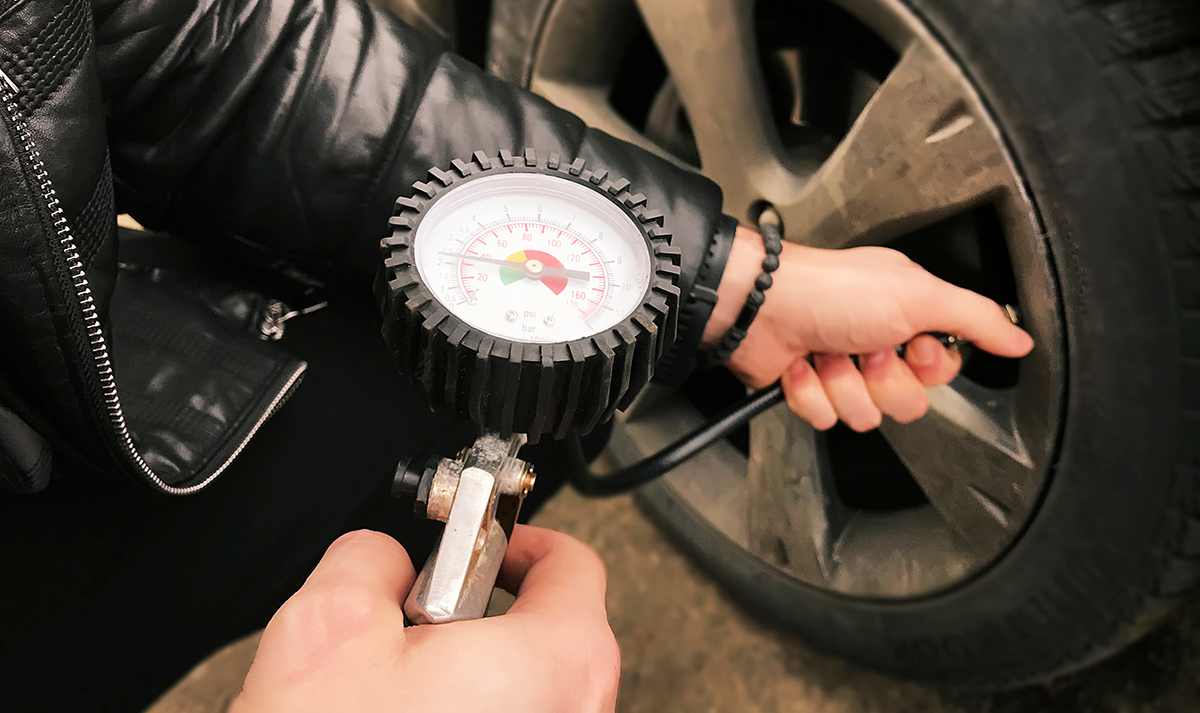
In order to take care of your tyres, it is recommended that you check them monthly, at least. However, if you tend to drive often or for long distances, it would be more beneficial to check your tyres fortnightly or even weekly.
When tyres are used often, not taken care of, or used in harsh weather conditions, you will find that overtime they will lose pressure and, in turn, affect its performance. So, it is important all pressures are as per the manufacturer’s guidelines (these can be found on the back of the fuel filler cap flap, on one of the front door frames, or in the handbook). Pressures should be consistent across each axle (so both front tyres the same as each other, both rear the same). The guides usually show different pressures for driving the car when empty or if fully loaded. Front pressures can often differ from rear ones because a car has different weight considerations with the engine usually over the front wheels.
2. Check your tyre treads
After checking the pressure of your tyres, the next step to take care of your tyres is checking the tyre treads. The minimum in the UK is 1.6mm across the middle three quarters of the tyre width. While you can use a tread depth gauge, it is easy to check this visually. You can check the tread depth by looking at the central groove around a tyre. It will have small block markers at various points, and these are 1.6mm from the base of the tyre. If they become flush with the rest of the tread, then the tyre is worn to its legal minimum.
Note: We recommend replacing your tyres before they reach 2mm as the performance of the tyre less than 3mm can quickly deteriorate with its grip and ability to expel water.
3. Look out for damages
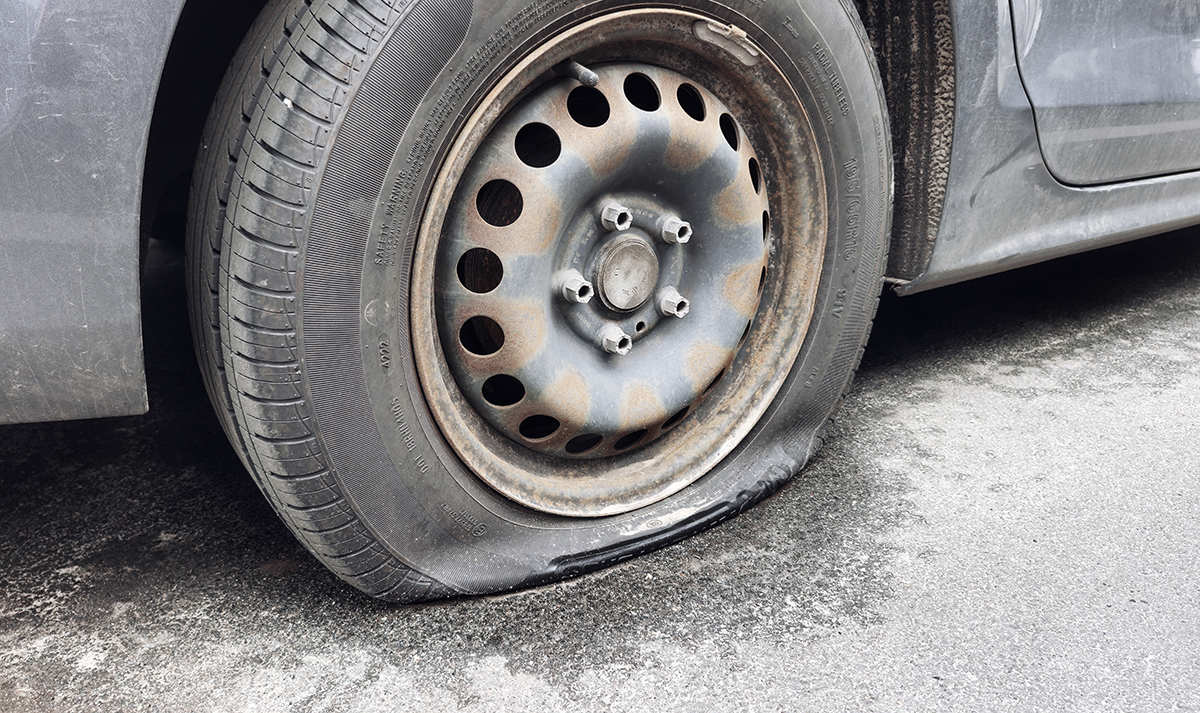
As well as the tread depth and pressure, it is important that you regularly check the tyres for any obvious issues such as; cracking, deformities, cuts, and damages.
Cracking indicates that the tyres are old and often hardened, affecting both ride and grip.
Deformities can be anything from a fault in manufacture or more likely the tyre has been involved in an impact, perhaps with a pothole or curb.
Cuts or scuffing has the potential to lead to failure or hide internal damage.
If there is a dent in the wheel rim, it could mean the tyre is damaged internally too, even if there is no visible sign.
4. Check the wheel alignment
If your tyres are wearing on the outer or inner edges, it is likely that your car requires its wheel alignment checking and adjusting. This isn’t confined to older cars; it could be the result of an impact. Poorly aligned wheels can lead to uneven tire tread wear, diminishing tire performance, raising fuel usage, and making your tires vulnerable to damage. Your wheel alignment may become skewed if you hit a curb, encounter a road pothole, or traverse a speed bump too hastily.
You may notice misalignment of your wheels if your steering wheel vibrates as your drive, the car pulls off to either the left or right side, or even a squeaking noise from your tyres.
We advise that you take care of your tyres and wheel alignment by booking your car into a garage to have a professional make the adjustments.
5. Drive carefully

Not only is it important to do the previous 4 steps to take care of your tyres but if you drive erratically and clumsily then you are likely to undo all of the work and time you’ve spend already taking care of your tyres. Therefore, it is vital that you keep a consistent driving style. This involves avoiding sudden accelerations, particularly in areas where abrupt braking is inevitable. Steer clear of uneven road surfaces and potholes whenever feasible to minimise wear and tear on your vehicle. When encountering speed bumps, reduce speed significantly to cushion the impact and protect your vehicle's suspension. Additionally, minimise frequent stops and starts, especially in congested traffic situations, by allowing more time and space between vehicles. This approach not only conserves fuel but also reduces the strain on your vehicle's engine and brakes, promoting a smoother and more enjoyable driving experience.
Tips to Take Care of Your Car Tyres
Under-inflated tyres can increase fuel consumption. Incorrectly inflated tyres will also cause premature wear. Over inflation will wear the centres of the treads; under inflation will wear the outer edges.
While all cars sold in the EU since November 2012 must be fitted with tyre pressure monitoring systems (TPMS), the sensors are notorious for failing so it still makes sense to do a visual check each time you approach your car.
Don't forget about your spare tyre! Whether your car carries a full-sized spare tyre or smaller ‘space-saver’, you should check this too. Invariably, they spend their lives beneath the boot floor don’t become worn out but can lose pressure or simply become old. If your car has a repair kit - a can of sealant and a compressor - it’s also important to check these are in good order.
When it comes to replacing tyres, it is important to have the same brand and model of tyre on each axle (and ideally on all four wheels) to ensure consistent performance, especially for braking. After that, there is an element of personal choice. The general rule of ‘you get what you pay for’ holds true with tyres and the more expensive ones usually outperform the cheaper brands. You will need to ensure the tyres conform with the specification of the car too: they should be the right size for the wheels and have the correct load and speed ratings (see below).
Usually, cars wear tyres out, but age can be an issue for older cars doing low mileages. Remember tyres may have been manufactured some time before they were put on the car too. Modern tyres have a date stamp to indicate age: look for the letters ‘DOT’ and a four-digit number showing the week and year of manufacture. So, DOT 1017 would mean week 10 (i.e. March) in 2017. Tyres older than 10 years are widely considered unsafe; many manufacturers recommend they are replaced at six years.
Useful Information about Tyres
When replacing a tyre, you will be asked for its specification so that the new one will be correct for your car. All manufacturers use a standardised set of numbers and letters.
It is written on the sidewall and looks like this: 275/45 R 17 91 W.
The first part relates to the tyre’s size, the second to its performance. Here is what the numbers mean in this example:
275 is the width in millimetres
45 is the height ratio (in this example the height of the tyre wall is 45% of the width)
R relates to the type of structure (R for radial)
17 is the diameter of the wheel in inches
91 is the load rating (in this case maps to 615kg for each tyre)
W is the speed rating (in this case a maximum of 168mph)