Bristol Council scraps diesel ban for clean air zone
The new Bristol Clean Air Zone (CAZ) has created a range of new restrictions for vehicles in the city of Bristol intended to improve people’s health by reducing air pollution. The previous ‘diesel ban’ was scrapped earlier in 2021, now under the new plan all vehicles will be able to enter Bristol’s Clean Air Zone. However, older and more polluting vehicles will have to pay a daily charge to be allowed in the central zone
What was the Bristol diesel ban?
The previously proposed ban was controversial and would have prevented privately-owned diesel vehicles from entering their central zone between 7am and 3pm every day.
With particulates and nitrogen dioxide contributing to poor air quality and affecting people’s health in Bristol’s city centre, it became important to start cutting the number of vehicles that created them - notably older diesel models.
Bristol City Council, under a legal obligation to reduce pollution in the city, had already missed government deadlines for providing details of their plans. The council proposed the diesel ban initially but has since opted instead to implement the CAZ (clean air zone) to tackle Bristol’s air quality and reduce harmful levels of air pollution caused by traffic.
Toxic air pollution contributes to about 300 deaths a year in Bristol alone, so the council made it its duty to reduce pollution in the shortest possible time. The aim was to reduce public exposure to nitrogen dioxide by putting restrictions on the highest polluting vehicles by encouraging the use of cleaner vehicles such as electric & hybrid cars.
They also set an incentive to motivate people to walk, cycle, or use public transport where possible to reduce emissions within Bristol city.
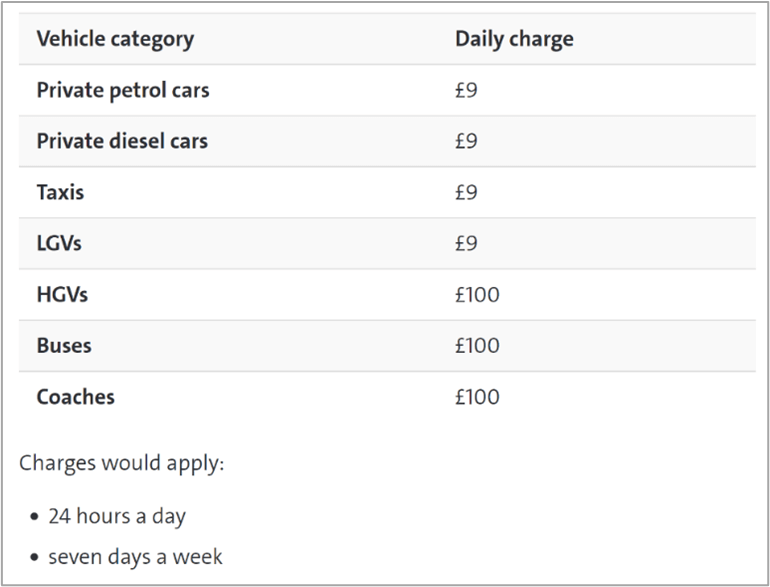
Figure 1 Bristol.gov clean air zone charges
What is the new Bristol Clean Air Zone?
Bristol has designed the size of the clean air zone and the boundary with the aim of meeting air quality targets in a shorter period, especially targeting the central area which had the worst air pollution.
The zone is intended to encourage drivers and businesses to either update their vehicle, change their route, or not make unnecessary trips. No vehicles are banned from entering the zone, but older vehicles will have to pay a daily charge for travelling within the zone.
The revenue raised from the scheme is planned to be reinvested back into the local community and support individuals and businesses to switch to cleaner vehicles, along with the introduction of green public transport.
The below table shows how much people will be charged daily if you have a vehicle that doesn’t comply with the CAZ. If you live within the Clean Air Zone, you'll only be charged if you make a journey, not by the 24-hour period which would be the case for visitors or people who live outside the zone.
For more information about the boundaries of the zone, please view a map of Bristol’s Clean Air Zone here.
Does your vehicle comply with the Clean Air Zone requirements?
Vehicles affected by the Clean Air Zone will be diesel cars and vans with Euro 5 engines or older, and petrol vehicles with Euro 3 engines or older. According to Bristol.gov over 71% of vehicles in Bristol are already compliant, meaning only a minority of vehicles driving in the CAZ will be charged.
If you own a petrol car that was registered in 2006 with the Euro 4 emission standards, your car is likely to meet the CAZ requirements. This was after vehicles were re-designed to reduce the volume of harmful commissions that were being produced by exhausts.
With regards to diesel cars, they must meet the Euro 6 emission standard. Only cars that have been registered since 2015 will qualify for driving in the Clean Air Zone.
Check whether your current vehicle can drive in the CAZ here with the Government’s compliance checker tool (GOV.UK).
Bristol council have said they will do their best to support people who are most impacted by the CAZ. This includes low-income workers and residents inside the zone.
There'll be exemptions for individuals earning less than £26,000 a year and those who are visiting hospitals. These people will be able to apply for a one year’s exemption. The proposed exemptions are to give time for Bristol’s locals to take advantage of financial support to upgrade to less polluting vehicles.
The Bristol clean air zone should be implemented from October 2021. Bristol city council estimates their chosen CAZ (clean air zone) will end up complying with the government’s legal limits of air pollution in full by 2023.
Choosing an electric vehicle as your next mode of transport
Besides lower fuel costs and having to pay no tax, electric vehicles are a greener alternative to diesel vehicles in helping keep the air in our cities cleaner.
If you want to be greener – then switching to an electric vehicle is the thing to do, check out our extensive range of electric cars available.
If you’re worried about not having access to a charging station at your home, there is no need to worry, since we can organise to install a charging pod for your home. So, if you’d like to drive with peace of mind in any clean air zone within the UK and help prevent air pollution, browse our electric vehicle lease deals or order even order a home charging pod today.