

Nissan Leaf Car Leasing
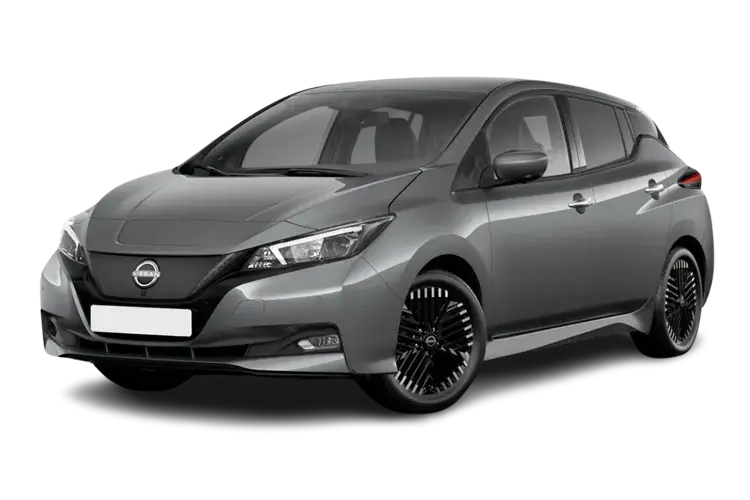
The Nissan Leaf is an all-electric hatchback designed for drivers who want to move to electric driving without choosing an SUV. A Nissan Leaf lease can suit daily commuting, urban driving and regular longer journeys, provided the vehicle’s battery capacity, charging requirements and annual mileage match the way you use your car.
The current Car Leasing vehicle selection is centred on automatic electric Leaf hatchbacks, including 52kWh and 75kWh battery configurations. The available specifications should be compared carefully because battery capacity, equipment and monthly rental can vary between versions.
Free Nationwide Delivery
We deliver to most places in mainland UK
Hassle-Free Process
We deliver to most places in mainland UK
Road Tax Included
Our vehicles come with road tax included
Nissan Leaf Featured Deals
Vehicle
Monthly Lease
Nissan Leaf Hatchback 160kW Engage 75kWh 5dr Auto
£344.23
inc VAT
Nissan Leaf Hatchback 160kW Advance 75kWh 5dr Auto
£351.23
inc VAT
Nissan Leaf Hatchback 160kW Engage+ 75kWh 5dr Auto
£353.50
inc VAT
Nissan Leaf Hatchback 130kW Engage 52kWh 5dr Auto
£382.28
inc VAT
Nissan Leaf Hatchback 130kW Advance 52kWh 5dr Auto
£399.90
inc VAT
Nissan Leaf Hatchback 160kW Evolve 75kWh 5dr Auto
£413.36
inc VAT
Choose the right Nissan Leaf
The most important decision is not simply the trim name. It is the combination of battery capacity, power output, specification and lease terms.
52kWh Nissan Leaf
The current range includes:
Nissan Leaf Hatchback 130kW Engage 52kWh 5dr Auto
Nissan Leaf Hatchback 130kW Advance 52kWh 5dr Auto
A 52kWh Leaf may be suitable for drivers whose regular journeys are relatively predictable and who have convenient access to charging at home, work or nearby public locations.
Before selecting a 52kWh model, consider:
Your typical daily mileage.
The number of longer journeys you make.
Whether you can charge overnight.
How much range you need between charging stops.
Whether the Engage or Advance specification provides the equipment you require.
75kWh Nissan Leaf
The current range also includes the Nissan Leaf Hatchback 160kW Engage 75kWh 5dr Auto.
The larger battery is particularly relevant to drivers who regularly travel longer distances or want more flexibility between charging sessions. It should not, however, be treated as a guarantee of a specific real-world range. Actual distance depends on speed, weather, temperature, traffic, driving style, vehicle load, heating and air conditioning.
A larger battery may be useful for motorway driving, but the decision should consider both:
How far the car can travel between charges.
How easily and quickly you can recharge during longer journeys.
Engage or Advance: what should you compare?
The current 52kWh options include both Engage and Advance versions.
The difference between these specifications should be assessed using the exact equipment shown on the live vehicle quotation. Do not assume that every feature is included on every version or model year.
When comparing the two, check:
Infotainment and smartphone connectivity.
Driver-assistance systems.
Parking cameras and sensors.
Interior materials and comfort equipment.
Wheel design and exterior details.
Charging equipment.
Warranty and service information.
Any optional equipment added to the quotation.
The right specification is the one that provides the equipment you need without paying for features that are not important to you.
Is the Nissan Leaf suitable for everyday driving?
The Leaf can be a sensible choice for everyday driving when the charging routine is practical.
Commuting
A Leaf may suit a regular commute where the daily distance is consistent and charging is available at home or work. Drivers should calculate their expected weekly mileage rather than relying only on the vehicle’s advertised maximum range.
Urban driving
Electric driving can be convenient for stop-start traffic and shorter journeys. However, repeated short trips in cold weather may affect energy consumption, particularly when heating is used.
Motorway journeys
Motorway driving generally uses more energy than slower mixed driving. If you frequently travel long distances, compare the 52kWh and 75kWh versions based on:
Expected motorway range.
Public charging availability along regular routes.
Charging speed for the exact vehicle.
Time available for charging stops.
The cost of public charging.
Family and luggage use
The Leaf’s hatchback layout can suit everyday errands, commuting and normal passenger use. Before ordering, check the actual boot space, rear-seat requirements and whether the vehicle can accommodate your usual luggage or equipment.

Charging a Nissan Leaf
Charging should be considered before choosing an electric lease.
Home charging
Home charging is often the most convenient arrangement for drivers who can park off-street. A suitable home charger can allow the vehicle to recharge overnight, although charging time depends on the battery state, charger output, installation and other conditions.
Before ordering, check:
Whether you have suitable off-street parking.
Whether your electricity supply and property can support a home charger.
The installation cost.
The charging cable supplied with the vehicle.
Whether your usual electricity tariff offers off-peak pricing.
Whether your landlord or property manager needs to approve installation.
Public charging
Public charging may be necessary for drivers without home charging or during longer journeys. Check the charging networks available near your home, workplace and regular destinations.
Public charging costs and availability vary. A charger may also deliver less power than its advertised maximum because of battery temperature, state of charge, charger conditions or the vehicle’s own charging limits.
Charging connector
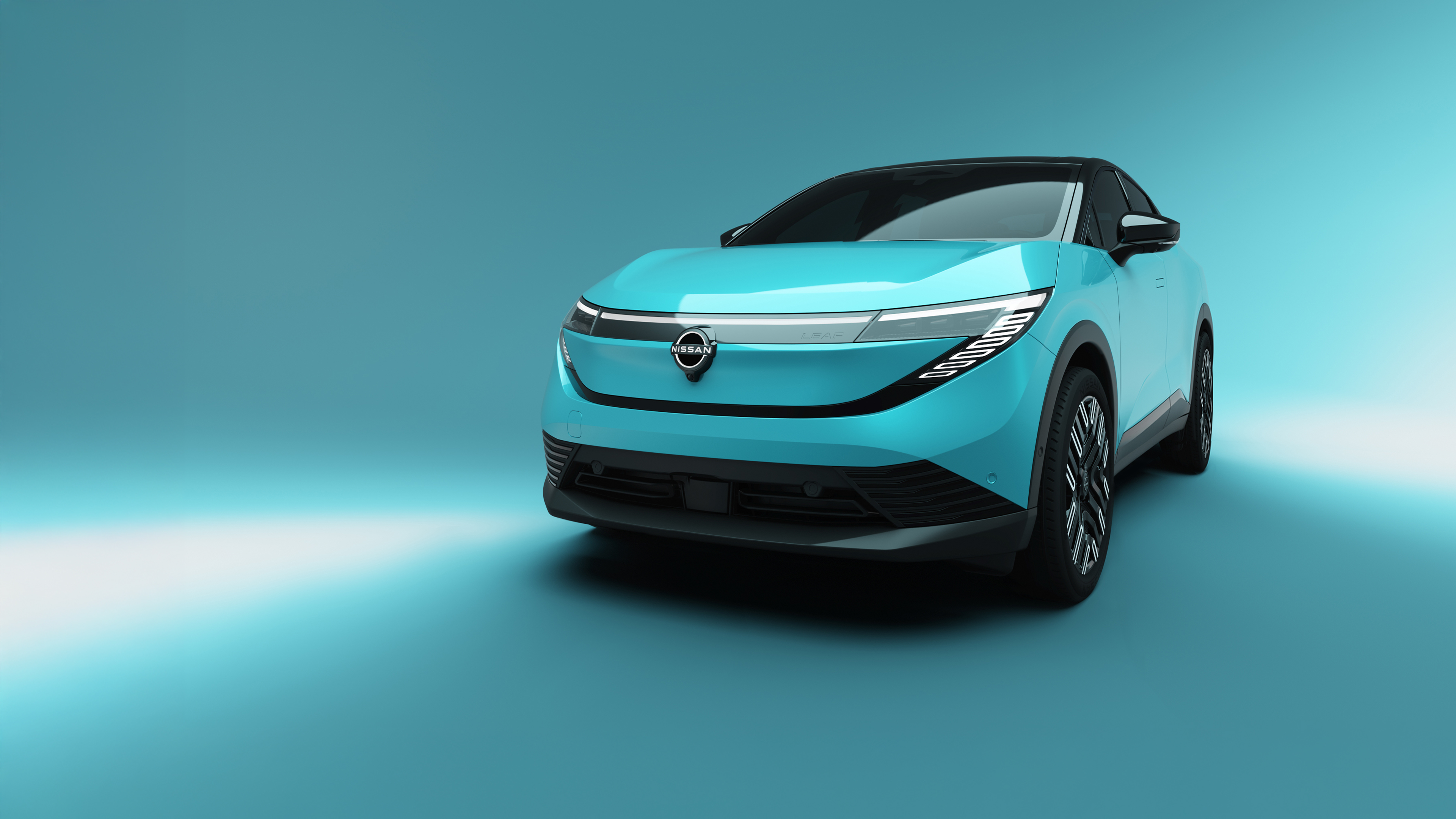
The charging connector and rapid-charging capability should be checked against the exact Leaf version being leased. Do not assume that charging hardware from an older Leaf is identical to the equipment used by a newer model.
Nissan Leaf range: what should you expect?
Official range figures are measured under standardised testing conditions. They are useful for comparing vehicles, but they are not a guaranteed distance for every journey.
Real-world range can be affected by:
Motorway speed.
Cold weather.
Heating and air conditioning.
Traffic and repeated acceleration.
Heavy loads.
Hills and road conditions.
Battery temperature.
Driving style.
Battery state of charge.
For this reason, choose a Leaf based on your normal driving pattern rather than the maximum published figure alone.
A useful planning method is to estimate:
Your average weekday mileage.
Your longest regular journey.
Your expected weekly mileage.
The charging points available at home, work and on common routes.
A reasonable buffer for weather and unexpected travel.
Nissan Leaf leasing for personal use
Personal Nissan Leaf leasing may suit a private driver who wants to use an electric hatchback through an agreed rental arrangement rather than purchasing it outright.
Before choosing a personal lease, compare:
The initial rental.
The monthly rental.
Contract length.
Annual mileage.
Battery capacity.
Vehicle specification.
Maintenance options.
Charging requirements.
Excess-mileage terms.
End-of-contract vehicle-condition requirements.
The monthly rental should be assessed alongside the initial rental and the total contractual commitment. A lower monthly figure may involve a higher initial rental or a different contract structure.
Nissan Leaf business leasing
A Nissan Leaf business lease may be relevant to eligible companies and business users whose driving requirements suit an electric hatchback.
The current vehicle options include business rental information on selected listings. Business users should review the exact quotation rather than assuming that every specification has the same business rental.
Before proceeding, confirm:
Business eligibility.
Contract structure.
Rental excluding VAT where applicable.
VAT treatment and potential recovery.
Annual mileage.
Charging arrangements for business journeys.
Whether the vehicle will be used mainly for commuting, client visits or longer-distance travel.
The tax implications with a qualified accountant or tax adviser.
An electric vehicle may have different tax implications from a petrol or diesel vehicle, but the outcome depends on the user’s circumstances and the applicable rules.
What affects the cost of a Nissan Leaf lease?
The cost of a Nissan Leaf lease depends on more than the model name.
The main factors include:
Battery capacity.
Power output.
Trim level.
Optional equipment.
Contract length.
Initial rental.
Annual mileage.
Personal or business leasing structure.
Maintenance selection.
Vehicle availability.
Credit assessment and contract eligibility.
Running costs to consider
Electric driving can change the way you budget for motoring, but a lease rental is only one part of the overall cost.
Consider:
Electricity
Home charging costs depend on your electricity tariff and how efficiently the vehicle uses energy. Public charging prices vary by provider, location, connection type and payment arrangement.
Insurance
Insurance is separate from the lease rental. Obtain a quotation for the exact vehicle and specification before committing.
Tyres
Tyre costs depend on wheel size, tyre specification, driving style and mileage. Check the tyre requirements for the exact Leaf version.
Servicing and maintenance
Maintenance may be available as an additional option depending on the agreement. Confirm what is included and which items remain the driver’s responsibility.
Charging installation
A home charger may involve an upfront installation cost. This should be included in your budget if home charging is important to your decision.
What is included in a Nissan Leaf lease?
The exact inclusions depend on the selected agreement. The current Car Leasing page presents general leasing services such as:
Delivery to most places in mainland UK.
Road tax included.
Personal and business leasing options.
Vehicle and contract selection through the live quotation process.
Check the individual agreement for:
Manufacturer warranty.
Breakdown assistance.
Maintenance cover.
Charging cable provision.
Delivery conditions.
Excess-mileage charges.
Vehicle-condition requirements.
Any administration or processing fees.
Do not assume that maintenance, charging equipment or additional protection products are included unless the quotation states this clearly.
Nissan Leaf contract hire
Nissan Leaf contract hire involves using the vehicle for an agreed period and mileage in return for contractual rental payments.
The agreement normally sets out:
The vehicle and specification.
Contract duration.
Initial rental.
Monthly rental.
Annual mileage.
Maintenance arrangement.
Return conditions.
Excess-mileage charges.
Vehicle-condition standards.
At the end of the agreement, the vehicle is generally returned in line with the contract. Review the agreement carefully before ordering, particularly if your annual mileage or driving requirements may change.
Is the Nissan Leaf right for you?
The Leaf may be worth considering if:
You want a fully electric hatchback.
Most of your journeys can be planned around available charging.
You can charge at home or work.
You want an automatic vehicle.
Your annual mileage fits the selected agreement.
You are comfortable planning longer journeys around charging stops.
You may need to consider the larger-battery version if you regularly drive longer distances. Conversely, the smaller-battery version may be sufficient if your journeys are shorter and charging is convenient.
The best choice depends on the relationship between battery size, daily mileage, charging access, contract terms and specification.
Not Sure the Nissan Leaf is Right for You?
Why not check out our lease deals for:
Frequently Asked Questions
The Leaf offers up to 168 miles with the 39kWh battery and up to 239 miles with the 62kWh battery, depending on the trim.
Charging times vary: approximately 7.5 hours using a 7kW home charger and around 60 minutes to 80% with a 50kW rapid charger.
Yes, especially the models with the 62kWh battery, which offer a longer range suitable for extended trips.
Yes! There might also be government grants available to assist with the installation cost, make sure to do your research on this before to save money.
Electric vehicles like the Leaf often qualify for lower Benefit-in-Kind rates, offering tax advantages for business users.
The Leaf is equipped with Nissan Safety Shield, ProPILOT (on selected trims), and multiple airbags for enhanced safety.
Yes, it includes a Type 2 charging cable compatible with most home and public chargers.