
Are hydrogen cars the future?
Hydrogen today
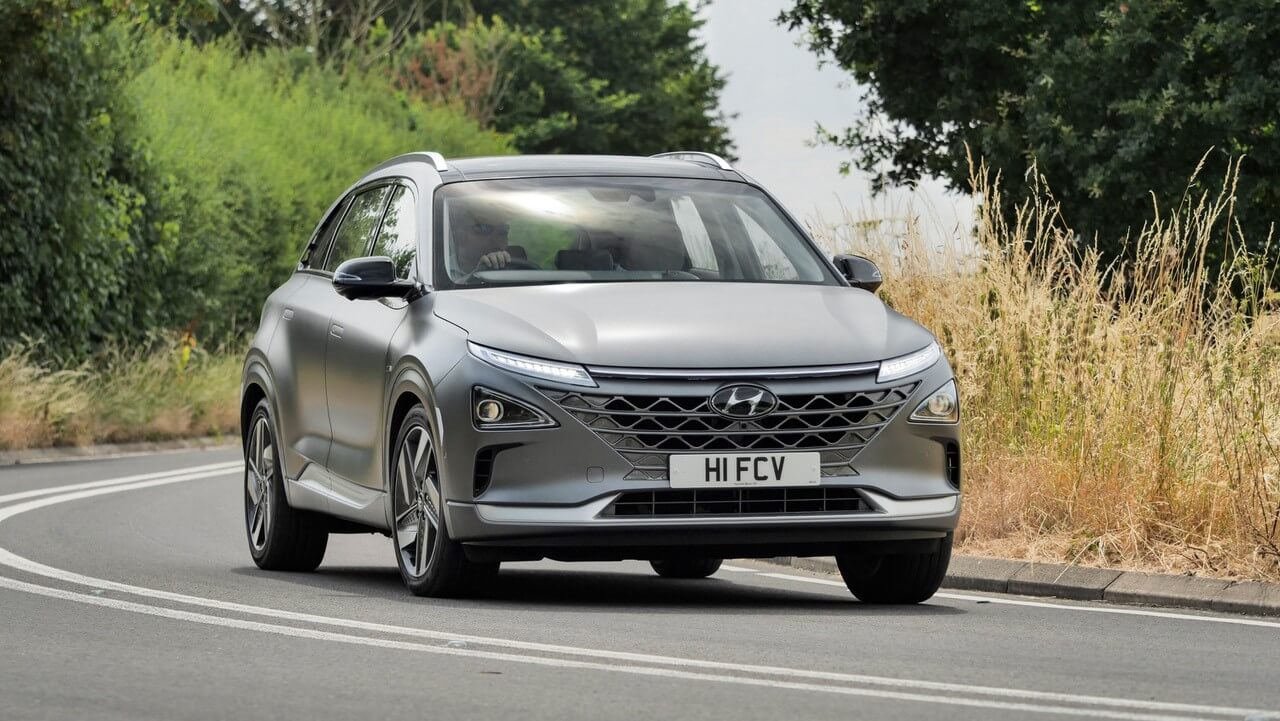
You might have heard about hydrogen-powered vehicles but did you know they’re available today? There isn’t a huge choice just yet but you can go out and order a Hyundai Nexo or Toyota Mirai.
But why use hydrogen in the first place? Is it safe? And is it going to be a significant player in the future?
But why hydrogen?
Legislation is in place to ensure manufacturers cut the carbon emissions of cars and trucks to help protect our planet. Using a hydrogen fuel cell is a means of providing power for vehicles which doesn’t emit CO2 when burned and so offers an opportunity for green motoring.
Tantalisingly, hydrogen is the most abundant element in the known universe. Unfortunately on Earth, most hydrogen atoms are tied-up in molecules such as natural gas (mainly methane, CH4) or water (H2O). Almost no pure hydrogen molecules (H2) occur naturally. This means they have to be extracted, for example by electrolysis when from water.

Is it safe?
This is one of the first questions which comes to mind when discussing hydrogen, especially after the Hindenberg hydrogen-filled airship disaster in 1937. While the graphic images of the Hindenberg are enough to frighten anybody, that was almost 85 years ago and things have changed.
Modern hydrogen cars use tough carbon-fibre fuel tanks, electrical safeguards and multiple leak detectors to ensure everyone’s safety, especially when refuelling. Both the Hyundai Nexo and Toyota Mirai earned a full five star NCAP safety rating too.
How does a hydrogen fuel cell car work?
The fuel cell works by the chemical reaction of combining of hydrogen and oxygen which generates electricity. The by-products are just water and heat.
Hydrogen fuel cell vehicles can be considered hybrids because they use both batteries and the fuel cell to provide power for the electric motors. The batteries are needed alongside the fuel cell in order to capture other energy such as that generated through regenerative braking.
Refuelling is similar to refilling with petrol or diesel and is typically achieved in around five minutes. The range is similar to a petrol model too; the Hyundai quotes a sensible 414 miles.
Advantages of hydrogen vehicles
Fuel cells are two to three times more efficient than an internal combustion engine. There are other benefits too: the hydrogen is compressed so doesn’t take up as much room as a fuel tank giving a similar range. The fuel cell is also lighter in weight when compared to the batteries needed in an EV.
Hydrogen fuel cell vehicles produce no harmful tailpipe emissions. And as long as the electrical energy used to extract the hydrogen is from renewable resources, the hydrogen is called ‘green hydrogen’. (However, the full picture of how to clean hydrogen is needed to look at the industry as a whole and factor in the resources and manufacture of the equipment needed to harness it.)
Not only is burning fossil fuels harmful to the environment, but they are also only a finite resource. But hydrogen is abundant; we just need to continue to develop efficient mechanisms to extract and store it.
With so few moving parts when compared to an internal combustion engine car, like EVs, hydrogen fuel cell cars are almost silent.

Disadvantages
According to UK H2 Mobility, there are currently only 11 hydrogen stations open and active in the UK. Five of these are located within the M25, with others in the southeast and Wiltshire. There are also two in Scotland, but none in Northern Ireland or Wales.
However, Trafford Green Hydrogen revealed that a hydrogen fuelling hub will be built in the Greater Manchester region. It will be the largest in the UK and would provide vehicles (and other businesses) with simple access to hydrogen fuel.
Hydrogen extraction is expensive. Not only that, it’s more costly to store than regular petrol or diesel. And for an industry still in its infancy, there is still considerable investment required to improve the processes and infrastructure.
Not all hydrogen currently produced is the cleaner green hydrogen. If it hasn’t been created from renewable energy, it’s termed ‘blue hydrogen’. And some current methods involve mining (as hydrogen is often found in fossil fuels) plus other processes which aren’t considered positive environmental factors.
Is it really the future?
We don’t have a crystal ball but with firms such as Bosch investing heavily in the development of fuel cell technology, it certainly has a future. Bosch reckons a fifth of vehicles will be powered by fuel cells by 2030.

Manufacturers are also taking hydrogen seriously. Land Rover is planning a hydrogen fuel cell prototype of its Defender, there is a hydrogen-powered Vauxhall Vivaro-e van due within a couple of years and BMW is likely to join the party in 2025 with a version of its iX5.
In all likelihood, it is unlikely to replace all rechargeable electric vehicles but will complement them, just as we have seen petrol and diesel-run side-by-side. For now, check out our top 10 low-emission vehicles over on our blog.