What to do in the event of a breakdown
When we consider the distances we drive, modern cars are remarkably reliable. But however well you maintain your vehicle, problems do occur, and vehicles can fail for any number of reasons.
Breaking down might be more than merely inconvenient: in the wrong place, it can also be dangerous for you and other road users. So, if you do break down, your main responsibilities are to ensure you and your passengers are safe and that your vehicle is positioned sensibly.
Non-motorways
Move the car to the side of the road or if possible, off the road. Be careful with soft verges: you don’t want to add being stuck to being broken down.
Put your hazard warning lights on (plus side lights at night or in poor visibility). Turn your front wheels slightly toward the kerb. (This means if your car is hit from behind by another vehicle, it won’t be pushed out into oncoming traffic.)
Get you and your passengers out of the car and wear hi-visibility vests if you have them.
If you have a warning triangle, look at where best to position it. (Don’t use one on a motorway - see below.) The triangle should be at least 50 metres behind the car and you should take care with other vehicles when placing it at the roadside. Think about how easily your car can be seen. If you are stopped beyond a blind bend or over the brow of a hill, consider placing it before the bend or on the crest of the hill to give other drivers as much notice as possible.
If your car won’t move and is stranded in a dangerous position or causing a major obstruction, call the police.
Call your breakdown recovery service to see if they can fix it on the spot or will recover the car to a garage. If you don’t subscribe to a recovery service, they will still come out for a fee (and may offer some form of discount of you join straight away).
Motorways
Motorways have specific challenges because of the speed and volume of traffic.
1. Regular motorways
If you break down on a motorway and can’t make it to the next exit, get your car to the hard shoulder, turn your hazard lights on, steer your front wheels slightly to the left and switch your ignition off. If it is dark, leave your sidelights on too.
It is recommended that you don’t even attempt a simple repair while on a motorway. Ensure everyone leaves the vehicle and stands behind the barrier. Wear safety vests if you have them in your car. Then call for help.
If you don’t have a working mobile phone, there are small information posts along the sides of motorways with reference numbers and an arrow showing which way to the nearest SOS phone. Note the number on the post nearest your car and walk to the phone which connects to the police.
If your car breaks down and you are unable to reach the hard shoulder, put your hazard lights on, keep your seatbelt fastened, call 999 and remain in the vehicle until help arrives.
2. 'Smart' motorways
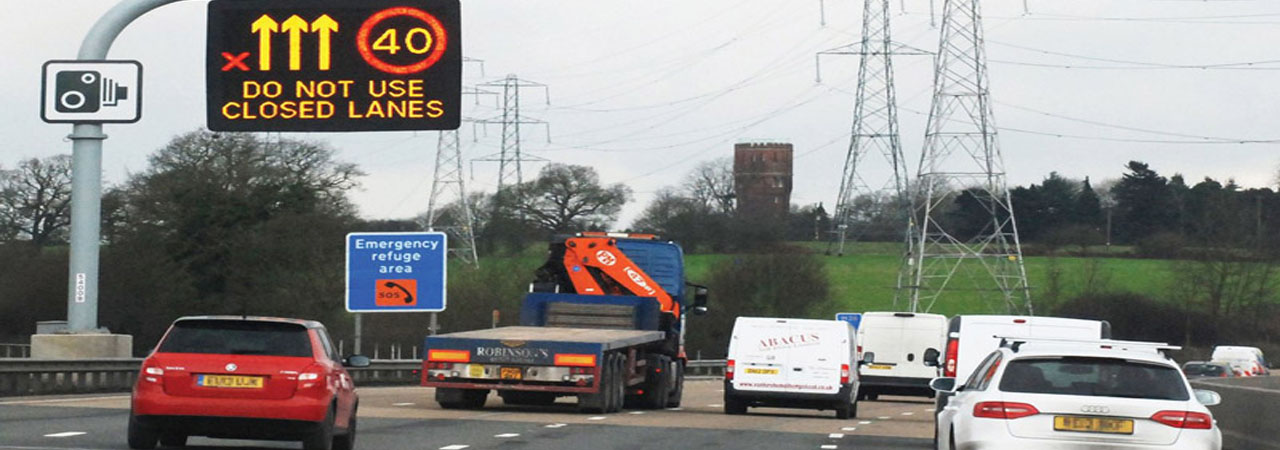
In a bid to increase traffic flow, many miles of UK motorways have been converted to smart motorways. This means that all lanes are available for vehicles (there is no hard shoulder) and the speed limit changes depending on traffic volumes.
There are emergency refuge areas - short pull-ins - along the length of smart motorways and you should try to reach one of these or a motorway exit junction. At the refuge area, call the control centre on the SOS phone provided.
If you do break down in a live traffic lane on a smart motorway and are unable to leave safely, you must stay in the vehicle with your hazard lights on and seatbelt fastened. Call the police (999) straight away to ensure you receive help quickly.
If you break down in the left lane, you may be able to get yourself out of the passenger side of your car and over the barrier. Ensure you leave your hazard warning lights on before you climb out and phone for help when you have reached safety.
Smart motorway lanes are monitored, and a red cross will be displayed on the gantry over your lane to warn other drivers of an obstruction.
Reaching an emergency refuge area is safer than remaining in a live traffic lane. So even with a flat tyre, we’d recommend driving at a slow and steady speed with your hazard lights on to get to a refuge point for safety rather than sitting in a carriageway - even if this destroys a tyre (and possibly damages the wheel too).