
Audi A1 Sportback Review
In terms of the big three German marques - Audi, BMW and Mercedes-Benz - if you are looking for a premium car in the smallest package, only Audi offers up a conventional B-segment model, the A1.
So for those who don’t need a large car but aren’t prepared to compromise on refinement, a compact Audi could make good sense. Okay, along with the perceived premium badge is its elevated price tag but strong residual prices mean finance deals can be favourable. It goes further than this of course: in our climate-conscious times, running a smaller car, with a modest engine offering good economy is less wasteful. The million dollar question of course is whether the A1 still offers the luxury and refinement of the larger Audis.
The new A1
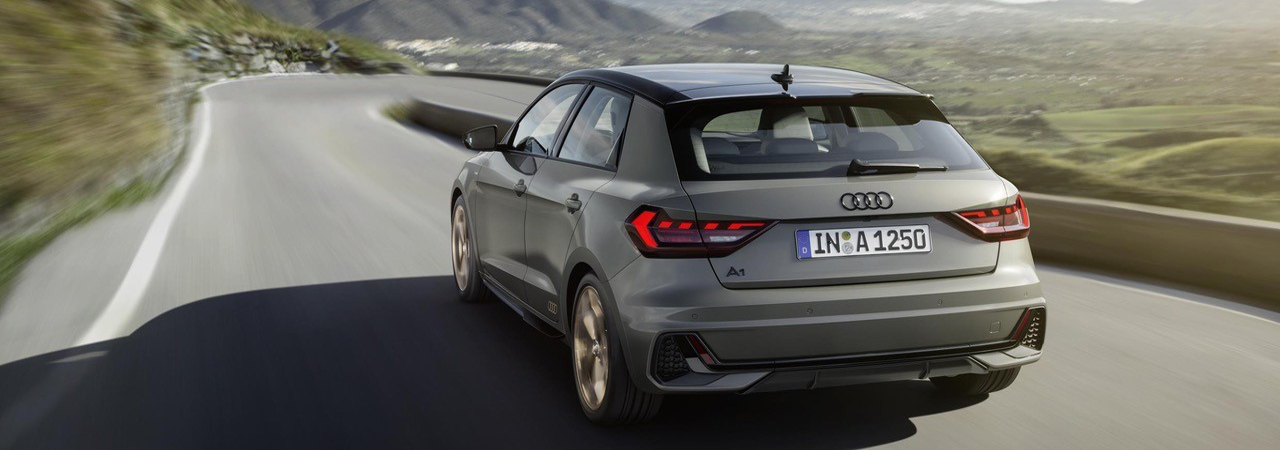
The new A1 Sportback has grown significantly. Extended by 56mm, it is now just over four metres in length. It appears more of a grown-up car than its predecessor too and is now only available as the five-door Sportback. Styling is more closely-aligned to the larger A3; the all-new body has received nips and tucks making it sharper all over. Above the rear wheels is a stronger shoulder line and the proportions of glass to body give it a strong, and typically Audi appearance. Up front, there are the three distinct air vents beneath the lip of the bonnet above the oversized mesh grille we are all familiar with.
Kit
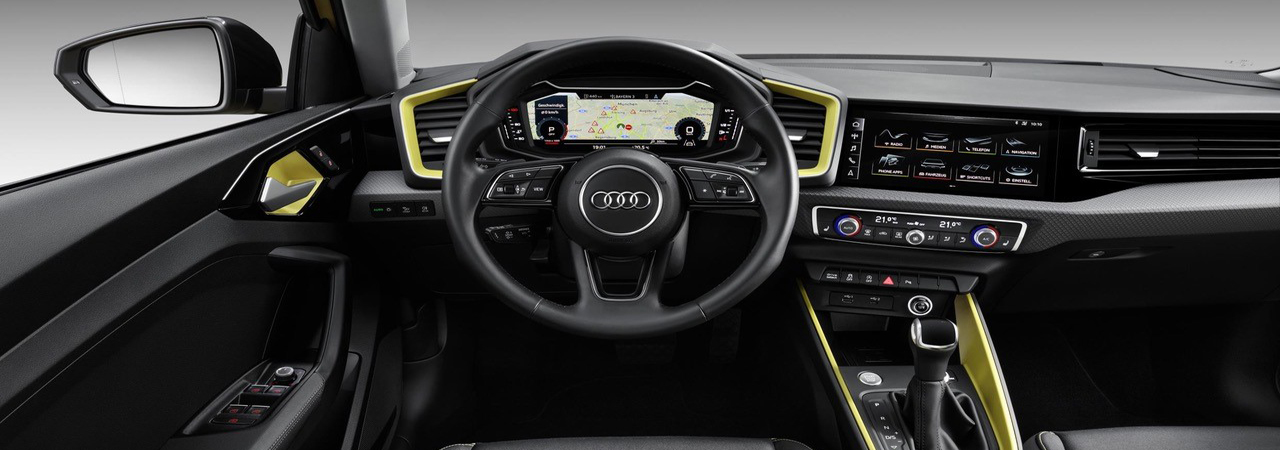
All A1 models have the Audi-tailored digital instrument cluster with 10.25-inch display as standard. This complements the improved main infotainment display - one of the neatest and clearest around - with slick switching between the car’s menus and phone mirroring.
Around the cabin, build quality looks good and our Sport trim level has the fabric seats, which are attractively finished and comfortable. The load space is a generous 270 litres in the boot (extending to 920 with seat down).
Other standard features are LED headlights and Audi pre sense, where hazards ahead are detected by radar, and acoustic and visual signals given to warn the driver. If necessary, the car will initiate automatic emergency braking to try to prevent a collision.
Engines and trims
Adopting Audi’s new format for power outputs, the A1 is available with the 25 TFSI (95PS), 30 TFSI (116PS), 35 TFSI (150PS) or 40 TFSI S Line Competition (200PS) engines, all of which are petrol.
Basic trim levels are the Technik, Sport and S Line, with three specific versions of the S Line: Competition, Contrast Edition and Style Edition. All models are available as manual or seven-speed automatic gearbox, although the entry 25 engine is five-speed manual rather than six. Just added to the range is the citycarver, a slightly ruggedised variant with an impressive extra 40mm of ground clearance.
Putting it through its paces
Our test of the new A1 could hardly have been more demanding. We packed in five people plus luggage for a return 450-mile trip to Scotland. Naturally, there isn’t quite the interior space of the larger Audi models but it is still decent, with good room for average height adults front and rear.
The 30 TFSI in manual guise proved a great match for the A1, balancing sufficient power to shift a (very) full car without fuss but delivering sensible fuel consumption. Importantly, it sits in the 15E insurance band (rather than 21E for the 35 version).
The refinement extends to the car’s ride. We often criticise overly-firm suspension but the A1 on its standard 16-inch alloy wheels gets it just about right, offering the crispness and control when the conditions allow for a more spirited drive yet delivering an accomplished ride on Britain’s varied road surfaces. And whether just one person on board or five-up, it always remained well-composed.
The little big Audi
The new A1 isn’t actually that small - in fact it’s barely shorter than the first generation A3. So whether you are starting your path into the Audi range or downsizing, the A1 really does manage a bigger car feel. It’s not only pleasing and refined, it’s darned capable too.