
Skoda Kamiq 2020 Review
In the Škoda SUV model line-up, the new Kamiq is the smallest, sitting beneath the Karoq and Kodiaq. Looking across the wider Volkswagen Group, it is just a little bigger than its nearest rivals, the SEAT Arona and Volkswagen T-Cross.
The larger Škoda SUVs bring tidy design, practical features and good perceived build quality and the new Kamiq is no different. But the real question is whether - among the many other SUV models already on the market - the Kamiq offers anything new.
Exterior
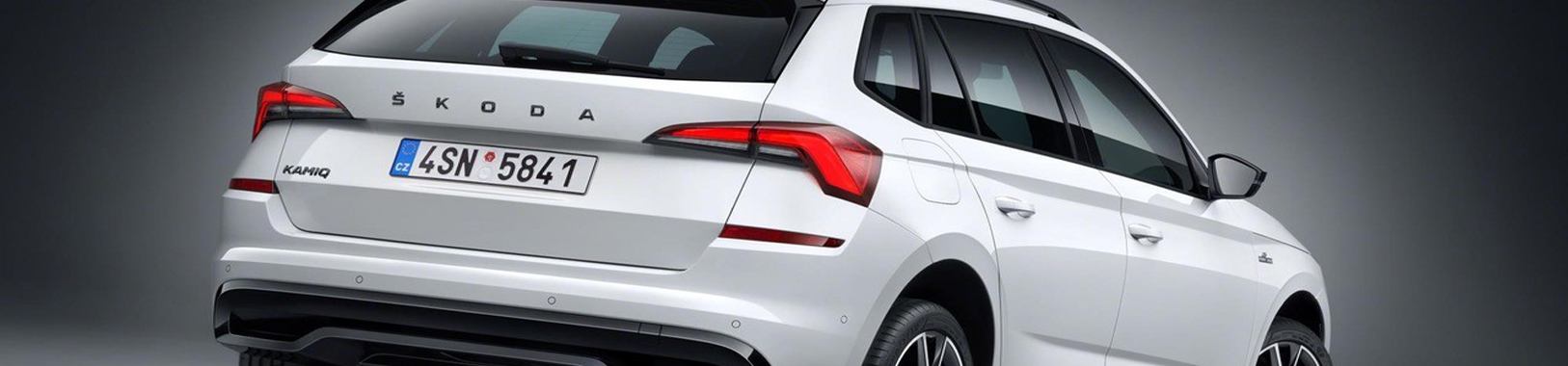
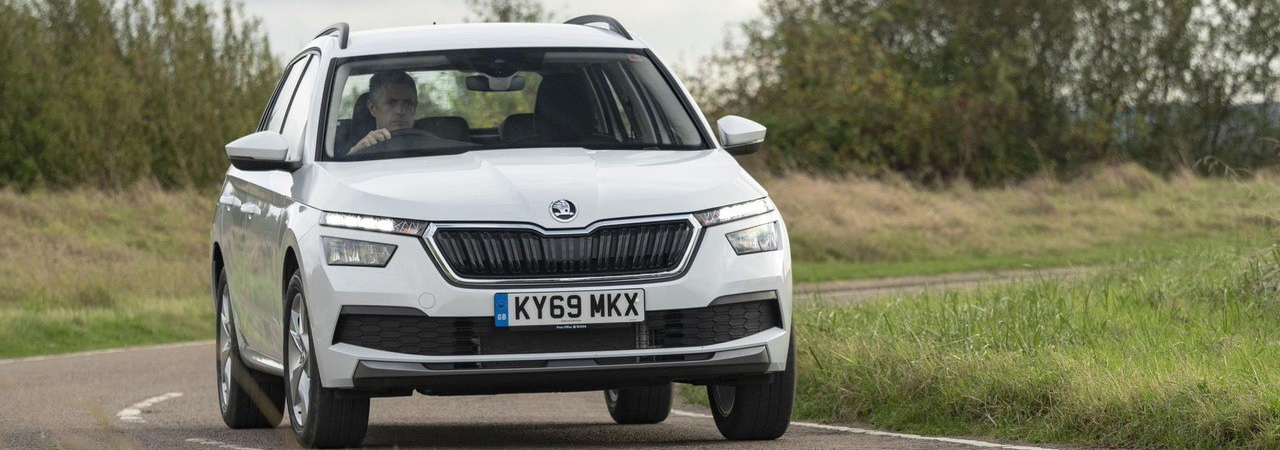
The Kamiq continues Škoda’s contemporary yet understated design trend and sits tall with a tight shoulder line and clean, unadorned panels. Unlike many SUVs, the Kamiq isn’t bigged-up to look all macho and off-road capable; wheel arches aren’t covered in black plastic, nor are there bold sill covers; a simple, rising detail line sweeps along the lower part of the doors and unlike the Karoq and Kodiaq, its wheel arches are round rather than squared-off.
Up front, the lighting and grille sit high with slender LED headlamps skimming the leading edge of the bonnet. The rear has similarly high lighting position and the now familiar stepped boot lid has widely spaced Škoda lettering beneath the glass.
Interior
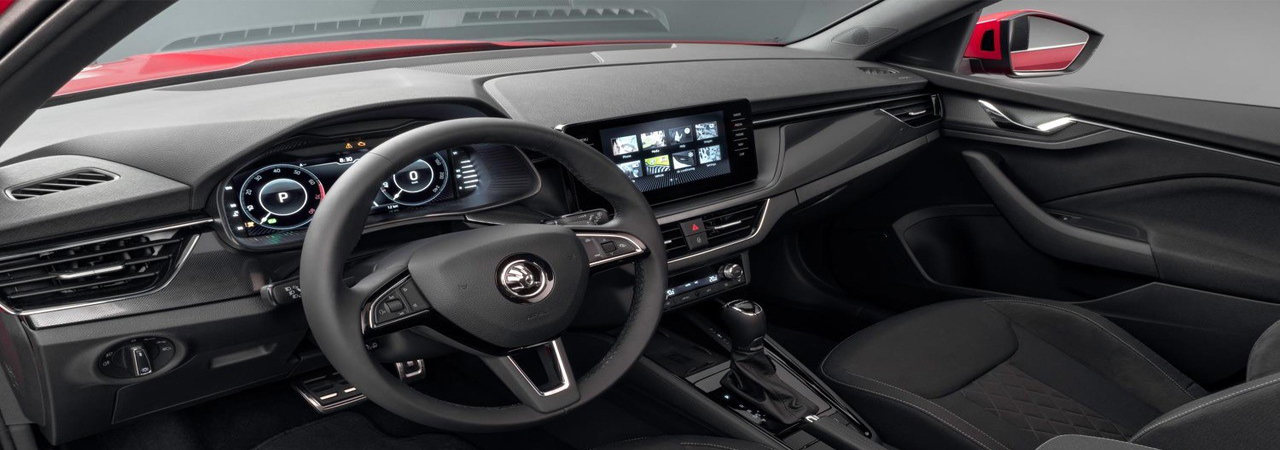
The Kamiq interior is a great exercise in common sense design. A separate heater control panel keeps operation simple and apart from vents and a neat touchscreen there’s nothing unnecessary on the facia. Seating is comfortable and supportive, headroom is good throughout and while there is little to lift the expanses of dark/black plastics, the fit is good and surfaces feel of a high quality.
Trims and engines
There are four trim levels: S, SE, SE L and Monte Carlo. Even the S arrives with LED headlamps, DAB radio, Bluetooth, auto wipers, hill hold control and 16-inch alloy wheels. SE ups the wheel size and infotainment screen size. It adds rear parking sensors and bumpers are body-coloured.
The display is larger still in the SE L, as are the wheels; satnav and cruise control are also included. Other extras on the SE L are Virtual Cockpit - a digital display for the driver - and dual zone climate control. Monte Carlo tops the bill with panoramic sunroof plus a number of styling tweaks including privacy glass, a blacked-out grille surround, lower black bumper details and red interior highlights.
Engines are the 1.0-litre TSI (95 and 115PS) and 1.5-litre TSI (150PS) petrol, and 1.6-litre (115PS) diesel. All but the lower-powered 1.0 TSI are available with the option of a DSG automatic gearbox. The Monte Carlo is not available with the diesel engine.
Driving
On test is the 1.0 TSI 115PS petrol - expected to be the bigger seller - fitted with the slick DSG auto ‘box. It is extremely competent on the road: taut enough to deliver good control yet sufficiently supple to cope with potholes and speed bumps. Interestingly, while 141mm shorter than the Karoq, it actually has a 13mm longer wheelbase, helping maximise room in the cabin and contributing to its decent ride quality.
The top two models use the Virtual Cockpit (although it is fitted as an option to our SE test car). While the display is very neat, the almost identical calibration of speedo and rev counter at their lower ends means it is very easy to misread one for the other, especially for more occasional drivers.
Summary
There really isn’t much to fault with the new Kamiq. In fact with the very slightly smaller footprint than the Karoq it makes just that bit more sense when battling through town traffic or squeezing along narrow country lanes. The 1.0 TSI 115 PS is certainly lively enough, although the extra torque in the 1.5 TSI makes sense if you regularly drive with a full car, especially for motorway miles.
Overall, it does what Škodas are traditionally good at: simply getting on with the job without fuss.